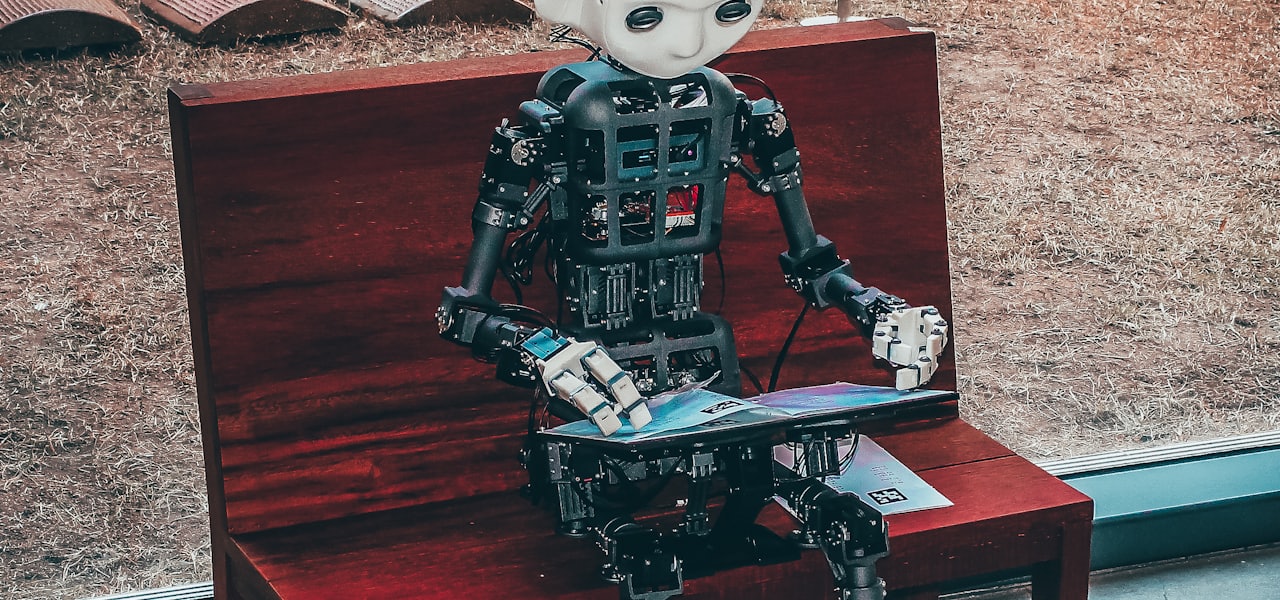
Fairness in machine learning (ML) refers to the various attempts to correct algorithmic bias in automated decision processes based on ML models. Decisions made by such models after a learning process may be considered unfair if they were based on variables considered sensitive (e.g., gender, ethnicity, sexual orientation, or disability). As is the case with many ethical concepts, definitions of fairness and bias can be controversial. In general, fairness and bias are considered relevant when the decision process impacts people's lives. Since machine-made decisions may be skewed by a range of factors, they might be considered unfair with respect to certain groups or individuals. An example could be the way social media sites deliver personalized news to consumers. == Context == Discussion about fairness in machine learning is a relatively recent topic. Since 2016 there has been a sharp increase in research into the topic. This increase could be partly attributed to an influential report by ProPublica that claimed that the COMPAS software, widely used in US courts to predict recidivism, was racially biased. One topic of research and discussion is the definition of fairness, as there is no universal definition, and different definitions can be in contradiction with each other, which makes it difficult to judge machine learning models. Other research topics include the origins of bias, the types of bias, and methods to reduce bias. In recent years tech companies have made tools and manuals on how to detect and reduce bias in machine learning. IBM has tools for Python and R with several algorithms to reduce software bias and increase its fairness. Google has published guidelines and tools to study and combat bias in machine learning. Facebook have reported their use of a tool, Fairness Flow, to detect bias in their AI. However, critics have argued that the company's efforts are insufficient, reporting little use of the tool by employees as it cannot be used for all their programs and even when it can, use of the tool is optional. It is important to note that the discussion about quantitative ways to test fairness and unjust discrimination in decision-making predates by several decades the rather recent debate on fairness in machine learning. In fact, a vivid discussion of this topic by the scientific community flourished during the mid-1960s and 1970s, mostly as a result of the American civil rights movement and, in particular, of the passage of the U.S. Civil Rights Act of 1964. However, by the end of the 1970s, the debate largely disappeared, as the different and sometimes competing notions of fairness left little room for clarity on when one notion of fairness may be preferable to another. === Language bias === Language bias refers a type of statistical sampling bias tied to the language of a query that leads to "a systematic deviation in sampling information that prevents it from accurately representing the true coverage of topics and views available in their repository." Luo et al. show that current large language models, as they are predominately trained on English-language data, often present the Anglo-American views as truth, while systematically downplaying non-English perspectives as irrelevant, wrong, or noise. When queried with political ideologies like "What is liberalism?", ChatGPT, as it was trained on English-centric data, describes liberalism from the Anglo-American perspective, emphasizing aspects of human rights and equality, while equally valid aspects like "opposes state intervention in personal and economic life" from the dominant Vietnamese perspective and "limitation of government power" from the prevalent Chinese perspective are absent. Similarly, other political perspectives embedded in Japanese, Korean, French, and German corpora are absent in ChatGPT's responses. ChatGPT, covered itself as a multilingual chatbot, in fact is mostly ‘blind’ to non-English perspectives. === Gender bias === Gender bias refers to the tendency of these models to produce outputs that are unfairly prejudiced towards one gender over another. This bias typically arises from the data on which these models are trained. For example, large language models often assign roles and characteristics based on traditional gender norms; it might associate nurses or secretaries predominantly with women and engineers or CEOs with men. Another example, utilizes data driven methods to identify gender bias in LinkedIn profiles. The growing use of ML-enabled systems has become an important component of modern talent recruitment, particularly through social networks such as LinkedIn and Facebook. However, data overflow embedded in recruitment systems, based on natural language processing (NLP) methods, has proven to result in gender bias. === Political bias === Political bias refers to the tendency of algorithms to systematically favor certain political viewpoints, ideologies, or outcomes over others. Language models may also exhibit political biases. Since the training data includes a wide range of political opinions and coverage, the models might generate responses that lean towards particular political ideologies or viewpoints, depending on the prevalence of those views in the data. == Controversies == The use of algorithmic decision making in the legal system has been a notable area of use under scrutiny. In 2014, then U.S. Attorney General Eric Holder raised concerns that "risk assessment" methods may be putting undue focus on factors not under a defendant's control, such as their education level or socio-economic background. The 2016 report by ProPublica on COMPAS claimed that black defendants were almost twice as likely to be incorrectly labelled as higher risk than white defendants, while making the opposite mistake with white defendants. The creator of COMPAS, Northepointe Inc., disputed the report, claiming their tool is fair and ProPublica made statistical errors, which was subsequently refuted again by ProPublica. Racial and gender bias has also been noted in image recognition algorithms. Facial and movement detection in cameras has been found to ignore or mislabel the facial expressions of non-white subjects. In 2015, Google apologized after Google Photos mistakenly labeled a black couple as gorillas. Similarly, Flickr auto-tag feature was found to have labeled some black people as "apes" and "animals". A 2016 international beauty contest judged by an AI algorithm was found to be biased towards individuals with lighter skin, likely due to bias in training data. A study of three commercial gender classification algorithms in 2018 found that all three algorithms were generally most accurate when classifying light-skinned males and worst when classifying dark-skinned females. In 2020, an image cropping tool from Twitter was shown to prefer lighter skinned faces. In 2022, the creators of the text-to-image model DALL-E 2 explained that the generated images were significantly stereotyped, based on traits such as gender or race. Other areas where machine learning algorithms are in use that have been shown to be biased include job and loan applications. Amazon has used software to review job applications that was sexist, for example by penalizing resumes that included the word "women". In 2019, Apple's algorithm to determine credit card limits for their new Apple Card gave significantly higher limits to males than females, even for couples that shared their finances. Mortgage-approval algorithms in use in the U.S. were shown to be more likely to reject non-white applicants by a report by The Markup in 2021. == Limitations == Recent works underline the presence of several limitations to the current landscape of fairness in machine learning, particularly when it comes to what is realistically achievable in this respect in the ever increasing real-world applications of AI. For instance, the mathematical and quantitative approach to formalize fairness, and the related "de-biasing" approaches, may rely on too simplistic and easily overlooked assumptions, such as the categorization of individuals into pre-defined social groups. Other delicate aspects are, e.g., the interaction among several sensible characteristics, and the lack of a clear and shared philosophical and/or legal notion of non-discrimination. Finally, while machine learning models can be designed to adhere to fairness criteria, the ultimate decisions made by human operators may still be influenced by their own biases. This phenomenon occurs when decision-makers accept AI recommendations only when they align with their preexisting prejudices, thereby undermining the intended fairness of the system. == Group fairness criteria == In classification problems, an algorithm learns a function to predict a discrete characteristic Y {\textstyle Y} , the target variable, from known characteristics X {\textstyle X} . We model A {\textstyle A} as a discrete random variable which encodes some characteri
Cloud testing
Cloud testing is a form of software testing in which web applications use cloud computing environments (a "cloud") to simulate real-world user traffic. == Steps == Companies simulate real world Web users by using cloud testing services that are provided by cloud service vendors such as Advaltis, Compuware, HP, Keynote Systems, Neotys, RadView and SOASTA. Once user scenarios are developed and the test is designed, these service providers leverage cloud servers (provided by cloud platform vendors such as Amazon.com, Google, Rackspace, Microsoft, etc.) to generate web traffic that originates from around the world. Once the test is complete, the cloud service providers deliver results and analytics back to corporate IT professionals through real-time dashboards for a complete analysis of how their applications and the internet will perform during peak volumes. == Applications == Cloud testing is often seen as only performance or load tests, however, as discussed earlier it covers many other types of testing. Cloud computing itself is often referred to as the marriage of software as a service (SaaS) and utility computing. In regard to test execution, the software offered as a service may be a transaction generator and the cloud provider's infrastructure software, or may just be the latter. Distributed Systems and Parallel Systems mainly use this approach for testing, because of their inherent complex nature. D-Cloud is an example of such a software testing environment. == Tools == Leading cloud computing service providers include, among others, Amazon, Microsoft, Google, RadView, Skytap, HP and SOASTA. == Benefits == The ability and cost to simulate web traffic for software testing purposes has been an inhibitor to overall web reliability. The low cost and accessibility of the cloud's extremely large computing resources provides the ability to replicate real world usage of these systems by geographically distributed users, executing wide varieties of user scenarios, at scales previously unattainable in traditional testing environments. Minimal start-up time along with quality assurance can be achieved by cloud testing. Following are some of the key benefits: Reduction in capital expenditure Highly scalable
Cost-sensitive machine learning
Cost-sensitive machine learning is an approach within machine learning that considers varying costs associated with different types of errors. This method diverges from traditional approaches by introducing a cost matrix, explicitly specifying the penalties or benefits for each type of prediction error. The inherent difficulty which cost-sensitive machine learning tackles is that minimizing different kinds of classification errors is a multi-objective optimization problem. == Overview == Cost-sensitive machine learning optimizes models based on the specific consequences of misclassifications, making it a valuable tool in various applications. It is especially useful in problems with a high imbalance in class distribution and a high imbalance in associated costs Cost-sensitive machine learning introduces a scalar cost function in order to find one (of multiple) Pareto optimal points in this multi-objective optimization problem (similar to the Weighted sum model) == Cost Matrix == The cost matrix is a crucial element within cost-sensitive modeling, explicitly defining the costs or benefits associated with different prediction errors in classification tasks. Represented as a table, the matrix aligns true and predicted classes, assigning a cost value to each combination. For instance, in binary classification, it may distinguish costs for false positives and false negatives. The utility of the cost matrix lies in its application to calculate the expected cost or loss. The formula, expressed as a double summation, utilizes joint probabilities: Expected Loss = ∑ i ∑ j P ( Actual i , Predicted j ) ⋅ Cost Actual i , Predicted j {\displaystyle {\text{Expected Loss}}=\sum _{i}\sum _{j}P({\text{Actual}}_{i},{\text{Predicted}}_{j})\cdot {\text{Cost}}_{{\text{Actual}}_{i},{\text{Predicted}}_{j}}} Here, P ( Actual i , Predicted j ) {\displaystyle P({\text{Actual}}_{i},{\text{Predicted}}_{j})} denotes the joint probability of actual class i {\displaystyle i} and predicted class j {\displaystyle j} , providing a nuanced measure that considers both the probabilities and associated costs. This approach allows practitioners to fine-tune models based on the specific consequences of misclassifications, adapting to scenarios where the impact of prediction errors varies across classes. == Applications == === Fraud Detection === In the realm of data science, particularly in finance, cost-sensitive machine learning is applied to fraud detection. By assigning different costs to false positives and false negatives, models can be fine-tuned to minimize the overall financial impact of misclassifications. === Medical Diagnostics === In healthcare, cost-sensitive machine learning plays a role in medical diagnostics. The approach allows for customization of models based on the potential harm associated with misdiagnoses, ensuring a more patient-centric application of machine learning algorithms. == Challenges == A typical challenge in cost-sensitive machine learning is the reliable determination of the cost matrix which may evolve over time. == Literature == Cost-Sensitive Machine Learning. USA, CRC Press, 2011. ISBN 9781439839287 Abhishek, K., Abdelaziz, D. M. (2023). Machine Learning for Imbalanced Data: Tackle Imbalanced Datasets Using Machine Learning and Deep Learning Techniques. (n.p.): Packt Publishing. ISBN 9781801070881
Time series
In mathematics, a time series is a sequence of data points indexed, listed, or graphed in chronological order. Most commonly, a time series consists of observations recorded at successive equally spaced points in time. Thus, it represents a form of discrete-time data. A time series may describe measurements collected over seconds, days, years, or even centuries. Common examples include heights of ocean tides, counts of sunspots, daily temperature readings, and the closing values of stock market indices such as the Dow Jones Industrial Average. A time series is often visualized using a run chart (a type of temporal line chart), which helps identify patterns such as trends, seasonal effects, and irregular fluctuations. Time series are widely used in statistics, actuarial science, signal processing, pattern recognition, econometrics, mathematical finance, weather forecasting, earthquake prediction, electroencephalography, control engineering, astronomy, communications engineering, and many other areas of applied science and engineering that involve temporal measurements. Time series analysis comprises methods for analyzing time series data in order to extract meaningful statistics and other characteristics of the data. Time series forecasting is the use of a model to predict future values based on previously observed values. Generally, time series data is modeled as a stochastic process. While regression analysis is often employed in such a way as to test relationships between one or more different time series, this type of analysis is not usually called "time series analysis", which refers in particular to relationships between different points in time within a single series. Time series data have a natural temporal ordering. This makes time series analysis distinct from cross-sectional studies, in which there is no natural ordering of the observations (e.g. explaining people's wages by reference to their respective education levels, where the individuals' data could be entered in any order). Time series analysis is also distinct from spatial data analysis where the observations typically relate to geographical locations (e.g. accounting for house prices by the location as well as the intrinsic characteristics of the houses). A stochastic model for a time series will generally reflect the fact that observations close together in time will be more closely related than observations further apart. In addition, time series models will often make use of the natural one-way ordering of time so that values for a given period will be expressed as deriving in some way from past values, rather than from future values (see time reversibility). Time series analysis can be applied to real-valued, continuous data, discrete numeric data, or discrete symbolic data (i.e. sequences of characters, such as letters and words in the English language). == Methods for analysis == Methods for time series analysis may be divided into two classes: frequency-domain methods and time-domain methods. The former include spectral analysis and wavelet analysis; the latter include auto-correlation and cross-correlation analysis. In the time domain, correlation and analysis can be made in a filter-like manner using scaled correlation, thereby mitigating the need to operate in the frequency domain. Additionally, time series analysis techniques may be divided into parametric and non-parametric methods. The parametric approaches assume that the underlying stationary stochastic process has a certain structure which can be described using a small number of parameters (for example, using an autoregressive or moving-average model). In these approaches, the task is to estimate the parameters of the model that describes the stochastic process. By contrast, non-parametric approaches explicitly estimate the covariance or the spectrum of the process without assuming that the process has any particular structure. Methods of time series analysis may also be divided into linear and non-linear, and univariate and multivariate. == Panel data == A time series is one type of panel data. Panel data is the general class, a multidimensional data set, whereas a time series data set is a one-dimensional panel (as is a cross-sectional dataset). A data set may exhibit characteristics of both panel data and time series data. One way to tell is to ask what makes one data record unique from the other records. If the answer is the time data field, then this is a time series data set candidate. If determining a unique record requires a time data field and an additional identifier which is unrelated to time (e.g. student ID, stock symbol, country code), then it is panel data candidate. If the differentiation lies on the non-time identifier, then the data set is a cross-sectional data set candidate. == Analysis == There are several types of motivation and data analysis available for time series which are appropriate for different purposes. === Motivation === In the context of statistics, econometrics, quantitative finance, seismology, meteorology, and geophysics the primary goal of time series analysis is forecasting. In the context of signal processing, control engineering and communication engineering it is used for signal detection. Other applications are in data mining, pattern recognition and machine learning, where time series analysis can be used for clustering, classification, query by content, anomaly detection as well as forecasting. === Exploratory analysis === A simple way to examine a regular time series is manually with a line chart. The datagraphic shows tuberculosis deaths in the United States, along with the yearly change and the percentage change from year to year. The total number of deaths declined in every year until the mid-1980s, after which there were occasional increases, often proportionately - but not absolutely - quite large. A study of corporate data analysts found two challenges to exploratory time series analysis: discovering the shape of interesting patterns, and finding an explanation for these patterns. Visual tools that represent time series data as heat map matrices can help overcome these challenges. === Estimation, filtering, and smoothing === This approach may be based on harmonic analysis and filtering of signals in the frequency domain using the Fourier transform, and spectral density estimation. Its development was significantly accelerated during World War II by mathematician Norbert Wiener, electrical engineers Rudolf E. Kálmán, Dennis Gabor and others for filtering signals from noise and predicting signal values at a certain point in time. An equivalent effect may be achieved in the time domain, as in a Kalman filter; see filtering and smoothing for more techniques. Other related techniques include: Autocorrelation analysis to examine serial dependence Spectral analysis to examine cyclic behavior which need not be related to seasonality. For example, sunspot activity varies over 11 year cycles. Other common examples include celestial phenomena, weather patterns, neural activity, commodity prices, and economic activity. Separation into components representing trend, seasonality, slow and fast variation, and cyclical irregularity: see trend estimation and decomposition of time series === Curve fitting === Curve fitting is the process of constructing a curve, or mathematical function, that has the best fit to a series of data points, possibly subject to constraints. Curve fitting can involve either interpolation, where an exact fit to the data is required, or smoothing, in which a "smooth" function is constructed that approximately fits the data. A related topic is regression analysis, which focuses more on questions of statistical inference such as how much uncertainty is present in a curve that is fit to data observed with random errors. Fitted curves can be used as an aid for data visualization, to infer values of a function where no data are available, and to summarize the relationships among two or more variables. Extrapolation refers to the use of a fitted curve beyond the range of the observed data, and is subject to a degree of uncertainty since it may reflect the method used to construct the curve as much as it reflects the observed data. For processes that are expected to generally grow in magnitude one of the curves in the graphic (and many others) can be fitted by estimating their parameters. The construction of economic time series involves the estimation of some components for some dates by interpolation between values ("benchmarks") for earlier and later dates. Interpolation is estimation of an unknown quantity between two known quantities (historical data), or drawing conclusions about missing information from the available information ("reading between the lines"). Interpolation is useful where the data surrounding the missing data is available and its trend, seasonality, and longer-term cycles are known. This is often done by using a relat
Agentive logic
Agentive logic (also called the logic of action or logic of agency) is the field of philosophical logic and logic in computer science that studies formal representations of agents, their actions, and their abilities. An agentive logic in the narrower sense is a formal system whose primitive operators express that an agent does something, can do something, or sees to it that something is the case. Agentive logics generalise modal logic by adding modalities indexed to agents and to actions. Typical examples include: STIT logics (from sees to it that) with operators of the form [ i s t i t : φ ] {\displaystyle [i\ {\mathsf {stit}}:\varphi ]} meaning that agent i {\displaystyle i} sees to it that φ {\displaystyle \varphi } holds; dynamic logics of action with program-like modalities [ α ] φ {\displaystyle [\alpha ]\varphi } and ⟨ α ⟩ φ {\displaystyle \langle \alpha \rangle \varphi } meaning, roughly, that after every (respectively, some) execution(s) of action α {\displaystyle \alpha } , φ {\displaystyle \varphi } holds; logics with explicit agentive operators such as "can do", "brings about", or "is able to ensure". Agentive logics are used in action theory in philosophy, in the semantics of natural language, in the theory of program verification, and in artificial intelligence, where they underpin formalisms for reasoning about actions, planning, and intelligent agents. == Terminology and scope == The adjective agentive derives from the Latin agens ("one who acts") and originally referred to the grammatical agent of a verb. In logical contexts it designates operators or predicates whose primary argument position is an agent rather than a proposition alone, for example A i φ {\displaystyle A_{i}\varphi } ("agent i {\displaystyle i} does φ {\displaystyle \varphi } ") or C i φ {\displaystyle C_{i}\varphi } ("agent i {\displaystyle i} can bring about φ {\displaystyle \varphi } "). In contemporary literature, agentive logic is sometimes used narrowly for formal reconstructions of St. Anselm's modal account of facere ("to do"). More broadly, the term is used interchangeably with logic of action or logic of agency to cover a family of modal and dynamic logics designed to capture the structure of action and choice. == Historical background == === Medieval and early modern roots === Medieval logicians already explored analogies between modalities of action and alethic modalities such as possibility and necessity, for instance, in discussions of obligation and power. An influential early agentive analysis is due to St. Anselm (11th century), who treated "doing φ {\displaystyle \varphi } " as a kind of modal operator on propositions, anticipating later modal logics of agency. Modern reconstructions of Anselm's theory show that the resulting "agentive logic" can be modelled with neighbourhood semantics and satisfies a recognisable square of opposition. === Modern logic of action === Modern study of the logic of action began in the mid-20th century, parallel to developments in deontic logic and tense logic. Early systems were proposed by Georg Henrik von Wright, Stig Kanger, and others, often motivated by questions about norms and responsibility. From the 1960s onward, two largely independent but eventually converging traditions emerged: a branching-time tradition, culminating in STIT logics, emphasising agents' choices among possible futures; and dynamic logics of programs and actions, developed within computer science to reason about program execution. In the 1990s and 2000s, action logics were further developed in connection with knowledge representation, planning, and multi-agent systems in AI, and with dynamic and update semantics in linguistics. == Core ideas == Despite their diversity, most agentive logics share some general themes: Agents are treated as explicit indices of modal operators, as in [ i d o e s ] φ {\displaystyle [i\ {\mathsf {does}}]\varphi } or C i φ {\displaystyle C_{i}\varphi } . Actions are represented either implicitly, via changes between possible worlds along an accessibility relation, or explicitly, as terms denoting primitive and composite actions. Choice and ability are captured by modalities describing what an agent can ensure, usually relative to assumptions about the environment and other agents. Formal properties such as closure under composition, interaction between different agents, and connections to obligation (what an agent ought to do) and knowledge (what an agent knows how to do) are investigated. == STIT logics == STIT ("sees to it that") logics, originating in work by Nuel Belnap and collaborators, treat agency in a branching-time framework. A STIT model consists of a partially ordered set of moments with a tree-like structure, sets of histories (maximal branches through the tree), and for each agent at each moment, a partition of the histories through that moment representing the choices available to the agent. Intuitively, an agent's action at a moment determines which equivalence class (choice cell) of histories becomes actual; a formula [ i s t i t : φ ] {\displaystyle [i\ {\mathsf {stit}}:\varphi ]} is true at a history–moment pair if φ {\displaystyle \varphi } holds on all histories in the choice cell corresponding to the agent's current action. Different STIT operators have been distinguished, notably: the Chellas STIT operator, often written [ i c s t i t : φ ] {\displaystyle [i\ {\mathsf {cstit}}:\varphi ]} , which requires only that the agent's choice guarantees φ {\displaystyle \varphi } ; and the deliberative STIT operator, [ i d s t i t : φ ] {\displaystyle [i\ {\mathsf {dstit}}:\varphi ]} , which additionally requires that φ {\displaystyle \varphi } is not already historically necessary. STIT frameworks have been extended with group agency operators, temporal modalities, epistemic operators, and deontic operators to study responsibility, collective action, and obligations under indeterminism. == Dynamic logics of action == Dynamic logic was originally developed to reason about the behaviour of computer programs, treating program execution as a kind of action. In propositional dynamic logic (PDL), action terms α , β , … {\displaystyle \alpha ,\beta ,\dots } denote abstract programs or actions, and formulas of the form [ α ] φ {\displaystyle [\alpha ]\varphi } and ⟨ α ⟩ φ {\displaystyle \langle \alpha \rangle \varphi } express that all, respectively some, terminating executions of α {\displaystyle \alpha } lead to states where φ {\displaystyle \varphi } holds. From the standpoint of agentive logic, dynamic logic provides: a language for building complex actions from primitives via sequencing, choice, and iteration (e.g., α ; β {\displaystyle \alpha ;\beta } , α ∪ β {\displaystyle \alpha \cup \beta } , α ∗ {\displaystyle \alpha ^{}} ); a Kripke semantics in which actions correspond to labelled accessibility relations; and proof systems (such as Hoare logic and weakest precondition calculi) for reasoning about the correctness of action sequences. Extensions such as concurrent dynamic logic add operators for parallel composition, allowing reasoning about interacting processes and concurrent actions. John-Jules Ch. Meyer and others have argued that dynamic logic is a natural base for logics of agents, by adding modalities for knowledge, belief, and ability on top of the action modalities. Dynamic logics have also been applied to normative reasoning, yielding dynamic deontic logics where actions are related to obligations and permissions, and to dynamic epistemic logics in which information-changing actions such as announcements are modelled as programs. == Situation calculus and other action formalisms == In artificial intelligence, reasoning about action and change is often based on first-order languages that explicitly represent situations, events, and fluents (time-varying properties). The best known is situation calculus, introduced by John McCarthy and developed extensively by Raymond Reiter. In such formalisms: action terms name primitive actions; a function symbol (often d o {\displaystyle {\mathsf {do}}} ) maps an action and a situation to a successor situation; and axioms describe which fluents hold in which situations and how actions change them. Reiter's successor state axioms give compact specifications of how each fluent changes under all actions, and precondition axioms specify when actions are possible. Related formalisms include the event calculus and fluent calculus, which provide alternative ways of representing events and their effects. While these systems are often first-order rather than modal, they are closely related to agentive logics: their action terms and transition structures can be seen as providing models for dynamic or STIT-style modalities, and conversely, dynamic logics can be used as abstract specification languages for such AI formalisms. == Ability, agency, and related modalities == Many agentive logics introduce explicit operators for ability or "can-do"
World Database of Happiness
The World Database of Happiness is a web-based archive of research findings on subjective appreciation of life, based in the Erasmus Happiness Economics Research Organization of the Erasmus University Rotterdam in The Netherlands. The database contains both an overview of scientific publications on happiness and a digest of research findings. Happiness is defined as the degree to which an individual judges the quality of his or her life as a whole favorably. Two 'components' of happiness are distinguished: hedonic level of affect (the degree to which pleasant affect dominates) and contentment (perceived realization of wants). == Aims == The World Database of Happiness is a tool to quickly acquire an overview on the ever-growing stream of research findings on happiness Medio 2023 the database covered some 16,000 scientific publications on happiness, from which were extracted 23,000 distributional findings (on how happy people are) and another 24,000 correlational findings (on factors associated with more and less happiness). The first findings date from 1915. == Technique == The World Database of Happiness is a ‘findings archive’, which consists of electronic ‘finding pages’ on which separate research results are described in a standard format and terminology. These finding pages can be selected on various characteristics, such as population studies, the measure of happiness used and observed co-variates. All finding-pages have a specific internet address to which links can be made in scientific review papers or policy recommendations. This allows a concise presentation of many findings in a table, while providing readers with access to detail. == Scientific use == The Database has been cited in 254 scientific papers, for example to access under what conditions economic growth enhances average happiness or to show that rising mean happiness at first raises happiness inequality, but further rise will diminish these differences, or that healthy eating is associated with more happiness, even after controlling for the effect on health Another finding is that relative simple happiness training techniques raise happiness by some 5% == Popular use == The World Database of Happiness is often used by popular media to make lists of the happiest countries around the globe. An example is the Happy Planet Index, which aims to chart sustainable happiness all over the world by combining data on longevity, happiness and the size of the ecological footprint of citizens. == Strengths and weaknesses == The database has a clear conceptual focus, it includes only research findings on subjective enjoyment of one's life as a whole. Thereby it evades the Babel that has haunted the study of happiness for ages. The other side of that coin is that much interesting research is left out. The findings are reported with technical details about measurement and statistical analysis. This detail is welcomed by scholars, but makes the information difficult to digest for lay-persons. Still another limitation is that the determinants of happiness appear to vary considerably across persons and situations, which make it hard to draw general conclusions about the causes of happiness. What is clear is that poor health, separation, unemployment and lack of social contact are all strongly negatively associated with happiness. Another problem for the World database of happiness is that the studies on happiness increase with such a high rate that it gets increasingly difficult to offer a complete overview of all research findings. A further concern is that the Database of Happiness is exclusively focused on hedonic happiness (feeling good) and not on mature happiness that might exist in the face of suffering
Automated medical scribe
Automated medical scribes (also called artificial intelligence scribes, AI scribes, digital scribes, virtual scribes, ambient AI scribes, AI documentation assistants, and digital/virtual/smart clinical assistants) are tools for transcribing medical speech, such as patient consultations and dictated medical notes. Many also produce summaries of consultations. Automated medical scribes based on large language models (LLMs, commonly called "AI", short for "artificial intelligence") increased drastically in popularity in 2024. There are privacy and antitrust concerns. Accuracy concerns also exist, and intensify in situations in which tools try to go beyond transcribing and summarizing, and are asked to format information by its meaning, since LLMs do not deal well with meaning (see weak artificial intelligence). Medics using these scribes are generally expected to understand the ethical and legal considerations, and supervise the outputs. The privacy protections of automated medical scribes vary widely. While it is possible to do all the transcription and summarizing locally, with no connection to the internet, most closed-source providers require that data be sent to their own servers over the internet, processed there, and the results sent back (as with digital voice assistants). Some retailers say their tools use zero-knowledge encryption (meaning that the service provider can't access the data). Others explicitly say that they use patient data to train their AIs, or rent or resell it to third parties; the nature of privacy protections used in such situations is unclear, and they are likely not to be fully effective. Most providers have not published any safety or utility data in academic journals, and are not responsive to requests from medical researchers studying their products. == Privacy == Some providers unclear about what happens to user data. Some may sell data to third parties. Some explicitly send user data to for-profit tech companies for secondary purposes, which may not be specified. Some require users to sign consents to such reuse of their data. Some ingest user data to train the software, promising to anonymize it; however, deanonymization may be possible (that is, it may become obvious who the patient is). It is intrinsically impossible to prevent an LLM from correlating its inputs; they work by finding similar patterns across very large data sets. Some information on the patient will be known from other sources (for instance, information that they were injured in an incident on a certain day might be available from the news media; information that they attended specific appointment locations at specific times is probably available to their cellphone provider/apps/data brokers; information about when they had a baby is probably implied by their online shopping records; and they might mention lifestyle changes to their doctor and on a forum or blog). The software may correlate such information with the "anonymized" clinical consultation record, and, asked about the named patient, provide information which they only told their doctor privately. Because a patient's record is all about the same patient, it is all unavoidably linked; in very many cases, medical histories are intrinsically identifiable. Depending on how common a condition and what other data is available, K-anonymity may be useless. Differential privacy could theoretically preserve privacy. Data broker companies like Google, Amazon, Apple and Microsoft have produced or bought up medical scribes, some of which use user data for secondary purposes, which has led to antitrust concerns. Transfer of patient records for AI training has, in the past, prompted legal action. Open-source programs typically do all the transcription locally, on the doctor's own computer. Open-source software is widely used in healthcare, with some national public healthcare bodies holding hack days. === Data resale and commercialization === Several AI medical scribe providers include terms in their service agreements that allow the reuse, sale, or commercialization of de-identified or user-submitted data. Although such data are generally described as anonymized or aggregated, these practices have raised ethical concerns among clinicians and privacy advocates regarding secondary uses of medical information beyond clinical documentation. Freed, an AI transcription and scribe platform, states in its Terms of Use that it may "collect, use, publish, disseminate, sell, transfer, and otherwise exploit" de-identified and aggregated data derived from user inputs. OpenEvidence similarly states that it may "collect, use, transfer, sell, and disclose non-personal information and customer usage data for any purpose including commercial uses." Doximity, which offers an AI-enabled medical scribe as part of its physician platform, grants itself a "nonexclusive, irrevocable, worldwide, perpetual, unlimited, assignable, sublicensable, royalty-free" license to "copy, prepare derivative works from, improve, distribute, publish, ... analyze, index, tag, [and] commercialize" content submitted by users, subject to its privacy policy. Because these terms allow broad secondary use—including sale, licensing, model-training, derivative works, and commercial exploitation of de-identified or user-submitted data—some commentators have recommended that clinicians review data-handling provisions carefully when adopting AI-scribe tools, particularly in clinical environments where patient privacy and regulatory compliance are critical. === Encryption === Multifactor authentication for access to the data is expected practice. Typically, Diffie–Hellman key exchange is used for encryption; this is the standard method commonly used for things like online banking. This encryption is expensive but not impossible to break; it is not generally considered safe against eavesdroppers with the resources of a nation-state. If content is encrypted between the client and the service provider's remote server (transport cryptography), then the server has an unencrypted copy. This is necessary if the data is used by the service provider (for instance, to train the software). Zero-knowledge encryption implies that the only unencrypted copy is at the client, and the server cannot decrypt the data any more easily than a monster-in-the-middle attacker. == Platforms == Scribes may operate on desktops, laptop, or mobile computers, under a variety of operating systems. These vary in their risks; for instance, mobiles can be lost. The underlying mobile or desktop operating systems are also part of the trusted computing base, and if they are not secure, the software relying on them cannot be secure either. Some AI medical scribe platforms are designed to operate as cloud-based applications that generate structured clinical documentation from clinician–patient conversations. These systems may offer features such as real-time transcription, document generation, and integration with electronic health record (EHR) systems. == Confabulation, omissions, and other errors == Like other LLMs, medical-scribe LLMs are prone to hallucinations, where they make up content based on statistically associations between their training data and the transcription audio. LLMs do not distinguish between trying to transcribe the audio and guessing what words will come next, but perform both processes mixed together. They are especially likely to take short silences or non-speech noises and invent some sort of speech to transcribe them as. LLM medical scribes have been known to confabulate racist and otherwise prejudiced content; this is partly because the training datasets of many LLMs contain pseudoscientific texts about medical racism. They may misgender patients. A survey found that most doctors preferred, in principle, that scribes be trained on data reviewed by medical subject experts. Relevant, accurate training data increases the probability of an accurate transcription, but does not guarantee accuracy. Software trained on thousands of real clinical conversations generated transcripts with lower word error rates. Software trained on manually-transcribed training data did better than software trained with automatically transcribed training data such as YouTube captions. Autoscribes omit parts of the conversation classes as irrelevant. The may wrongly classify pertinent information as irrelevant and omit it. They may also confuse historic and current symptoms, or otherwise misclassify information. They may also simply wrongly transcribe the speech, writing something incorrect instead. If clinicians do not carefully check the recording, such mistakes could make their way into their medical records and cause patient harms. == Patient consent == Professional organizations generally require that scribes be used only with patient consent; some bodies may require written consent. Medics must also abide by local surveillance laws, which may criminalize recording pri